Cancer Outliers: When the Worst Is Never Certain
The worst is never guaranteed. Among the ever-growing ranks of cancer patients, a handful carry an English nickname: “outliers”, those who defy statistics and represent an exception. Patients once considered doomed, who have beaten the darkest prognoses.
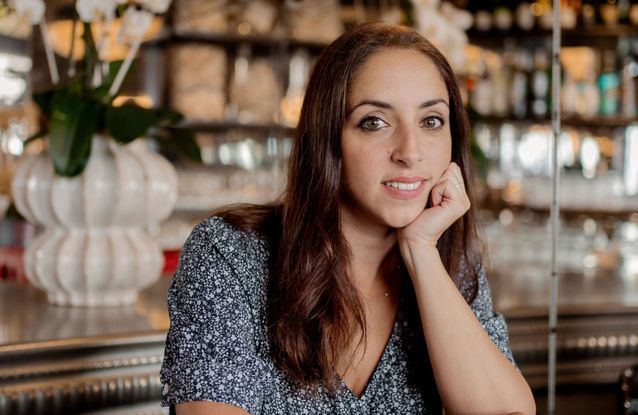
Take Chloé, for example. She was 33 years old in 2019 and nearly six months pregnant when persistent pain near her collarbone led her to seek medical advice. Tests revealed extensive liver metastases.
“They told me it looked like bunches of grapes,” recalls the radiant young woman, sitting in front of a glass of pineapple juice. “The largest was eight centimeters.”
A few days later, the diagnosis came: stage IV colon cancer. Statistics gave her almost no chance of survival.
“Taking into account my age, the aggressiveness of the tumor, and its spread to the liver… I had a 2% chance of surviving.”
Chloé began chemotherapy in November 2019. She gave birth on December 11, at seven and a half months of pregnancy. Eight days later, she started a new chemotherapy protocol - a cocktail of four different drugs. Of all the severe side effects, she mostly remembers the neuropathy in her fingertips, which made her hypersensitive to cold, prevented her from bathing her baby and forced her to wear gloves just to feed him.
The idea of her own death was omnipresent.
“I thought about writing my son one birthday letter per year until he turned 20. I recorded a video for my partner in case I disappeared.”
And yet, month after month, against all odds, the metastases shrank, then stabilized.
Unlocking the Secrets of Exceptional Cancer Survivors
Chloé’s oncologist explained that surgery on the remaining tumors was impossible and that she would need to consider her cancer a chronic disease.
“I had already undergone a year of chemotherapy - 25 sessions. I asked her, ‘So in ten years, I’ll have had 250?’ She replied, ‘We won’t last ten years.’”
But once again, the worst was not inevitable.
In January 2021, during a routine meeting at the CHU of Créteil, where Chloé was being treated, a doctor mentioned a highly specialized liver surgeon.
Why not ask him?
An appointment was made at Villejuif hospital. Upon reviewing the earliest scans, the surgeon was stunned.
“According to him, with a liver in that condition, I shouldn’t have survived more than six months.”
Then he examined the most recent scans.
“‘This is much better,’ he said. ‘Of course I can operate.’”
The surgery took place on March 1, 2021. After eight hours in the operating room, Chloé woke up with a liver “like Swiss cheese” - full of holes, but free of metastases.
Doctors were astonished when pathology results came back. Chloé shows us the report:
“No tumor cells detected.”
The masses visible on scans were dead cells - chemotherapy had already destroyed everything. A colonoscopy showed no trace of the primary tumor. Her oncologist admitted she did not understand and suggested six additional chemotherapy sessions as a precaution.
“I only did two - then I stopped.”
Since then, nothing to report, except the birth of a second child.
Studying “Miraculous” Survivors of Aggressive Cancers
A miracle? Science does not believe in miracles.
A French startup, Cure51, decided to focus on these outliers - these Cancer survivors who cheat death - to uncover the biological secrets behind their exceptional survival.
“All clinical trials try to understand why people die from Cancer,” explains Emna Makhlouf, Chief of Staff of Cure51. “We chose the opposite approach: to understand why some survive.”
Ninety-eight hospitals participate in the study, sending these rare patients to Cure51. Among them are Gustave Roussy Institute in Villejuif, Léon Bérard Center in Lyon, as well as hospitals in Barcelona and Berlin.
“These survivors are so rare that we have to look for them all over the world,” says Makhlouf, smiling.
In just one year, the French biotech identified 500 exceptional cancer survivors worldwide. Its goal is to recruit 10,000 within four years.
Pancreatic Cancer, Glioblastoma, Lung Cancer: Defying the Odds
In addition to Chloé, Cure51 identified Jean‑Luc, who was 50 years old in 2012 when he was diagnosed with stage IV pancreatic Cancer with liver metastases.
“They told me I had six months to live,” he recalls, thirteen years later.
One of his first reactions was to enter a civil partnership with his companion, to protect her financially in case of death. Then came chemotherapy. By the sixth session, tumor markers plummeted, and metastases shrank until they became undetectable on imaging.
He completed treatment and then continued with maintenance chemotherapy until 2018.
“And then one day, I said stop,” he laughs.
Since then, nothing to report - except a heart attack a year ago. Jean‑Luc continued smoking a pack a day for years (he has since quit).
His former oncologist, Dr. Dany Gargot, confirms:
“In thirty years of practice, I had never seen this. I already told colleagues back then that patients like this - extremely rare - needed to be studied.”
“They Clearly Have Something Others Don’t”
Each survivor has a unique story.
Yann, diagnosed at 35 in 2017 with metastatic pancreatic cancer, required nearly 100 chemotherapy sessions - and survived both the disease and the treatment. He now has a second child.
Catherine, now 51, is still being treated for glioblastoma, an aggressive brain tumor. She had less than a 10% chance of being alive five years after diagnosis in 2020. Median survival is typically 14 to 18 months. Over the past five years, she has traveled the world: Peru, Cambodia, Egypt, Italy.
All of these survivors enthusiastically agreed to participate in Cure51’s research.
“When my oncologist suggested it, it was the first truly positive thing he had told me,” Yann smiles.
For each new patient, Cure51 collects medical records and preserved tumor samples, then performs DNA sequencing. Results are compared with those of patients who died from the same cancer, in order to identify a potential unique molecular signature.
Cure51 is currently working on three particularly deadly cancers:
Pancreatic cancer
Small‑cell lung cancer
Glioblastoma
Soon, the biotech will also study metastatic colorectal Cancer and an aggressive form of breast Cancer known as triple‑negative breast Cancer.
Toward New Cancer Treatments Inspired by Survivors
Study results are expected within two years, but Cure51 has already made several discoveries.
“We’ve identified around ten characteristics that consistently appear in these patients,” Emna Makhlouf finally reveals. “They clearly have something others don’t. It’s incredibly exciting and confirms that our intuition was right.”
The ultimate goal is to use these findings to develop new Cancer treatments, offering hope to millions of patients worldwide.
“When I was still in treatment, that idea haunted me,” Chloé confides. “I kept telling myself: I have to hold on until science finds a solution.”
Read the full article
Read more about our Rosalind Study
Updated: April 1, 2026