Multiomics
What is Multiomics?
Multiomics is the integration of multiple biological data types such as genomics, transcriptomics, proteomics, metabolomics and epigenomics, to provide a comprehensive view of how cells, tissues and diseases function.

Rather than studying a single layer of biology, multiomics combines information from DNA, RNA, proteins and other molecular processes to better understand disease mechanisms and identify new therapeutic opportunities.
Why is Multiomics important in cancer research?
Cancer is a complex disease driven by interactions across many biological systems. Multiomics enables researchers to:
Discover novel therapeutic targets
Identify biomarkers for diagnosis and treatment
Understand why some patients respond differently to therapies
Reveal the biological mechanisms behind exceptional cancer survivors
By integrating diverse datasets, multiomics provides a more complete understanding of tumors than any single technology alone.
Related terms: Genomics, Transcriptomics, Proteomics, Precision Oncology, Target Discovery
Biomarker
What is a Biomarker?
A biomarker is a measurable biological characteristic that provides information about a person's health, disease, or response to treatment.
Biomarkers can include genes, proteins, RNA molecules, metabolites, or imaging findings. In oncology, they help clinicians diagnose cancer, predict outcomes, monitor disease progression, and guide treatment decisions.
Why are biomarkers important in cancer research?
Cancer biomarkers are essential for precision medicine because they help researchers and physicians:
Detect cancer earlier
Predict treatment response
Monitor disease progression
Develop targeted therapies
Select patients for clinical trials
Biomarker discovery is a major focus of modern cancer research and drug development.
Related terms: Precision Oncology, Multiomics, Target Discovery, Genomics
Transcriptomics
What is Transcriptomics?
Transcriptomics is the study of all RNA molecules (the transcriptome) produced by cells or tissues at a given time.
While DNA represents the genetic blueprint, RNA reveals which genes are actively being expressed. Transcriptomics therefore provides a real-time snapshot of cellular activity.
Why is transcriptomics important in oncology?
Researchers use transcriptomics to:
Identify active cancer pathways
Compare healthy and tumor tissues
Discover biomarkers
Understand resistance to therapies
Identify potential therapeutic targets
Transcriptomic analysis is often combined with genomics and spatial biology to better understand tumor biology.
Related terms: Genomics, Single-cell RNA Sequencing, Spatial Biology, Multiomics
Genomics
What is Genomics?
Genomics is the study of an organism's complete DNA, including all of its genes and genetic variations. In cancer research, genomics helps scientists identify mutations that drive tumor development and progression.
How is genomics used in cancer research?
Genomic technologies allow researchers to:
Detect cancer-causing mutations
Classify tumors
Identify inherited cancer risks
Develop targeted therapies
Understand tumor evolution
Genomics forms one of the foundational pillars of precision oncology.
Related terms: Transcriptomics, Biomarker, Precision Oncology, Multiomics
Precision Oncology
What is Precision Oncology?
Precision oncology is an approach to cancer treatment that tailors therapies to the unique biological characteristics of each patient's tumor.
Instead of using the same treatment for everyone, precision oncology considers genomic alterations, biomarkers, molecular pathways and clinical information to identify the most appropriate therapeutic strategy.
Why is precision oncology transforming cancer care?
Precision oncology enables researchers and clinicians to:
Match patients with targeted therapies
Improve treatment effectiveness
Reduce unnecessary side effects
Identify patients for clinical trials
Accelerate personalized medicine
Advances in multiomics and artificial intelligence continue to expand the possibilities of precision oncology.
Related terms: Biomarker, Target Discovery, Genomics, Multiomics
Target Discovery
What is Target Discovery?
Target discovery is the process of identifying genes, proteins or biological pathways that can be targeted to develop new medicines.
A therapeutic target is a molecule whose activity influences disease progression and can potentially be modified by a drug.
How does target discovery work?
Modern target discovery combines:
Multiomics data
Artificial intelligence
Computational biology
Functional genomics
Experimental validation
This integrated approach helps researchers prioritize the most promising drug targets while reducing the time required for early-stage drug discovery.
Related terms: Drug Discovery, Biomarker, Multiomics, Precision Oncology
Cancer Outlier
What is a Cancer Outlier?
A Cancer Outlier is a person who survives significantly longer than expected or responds exceptionally well to cancer treatment despite having a disease with a poor prognosis.
These individuals are uncommon and may carry unique biological characteristics that provide valuable insights into cancer biology.
Why study Cancer Outliers?
Studying Cancer Outliers helps researchers:
Discover new therapeutic targets
Understand mechanisms of long-term survival
Identify protective biological pathways
Improve future cancer treatments
Advance precision oncology
Cancer Outliers are helping reshape how researchers investigate some of the most aggressive cancers.
Related terms: Exceptional Responder, Precision Oncology, Biomarker, Multiomics
Exceptional Responder
What is an Exceptional Responder?
An Exceptional Responder is a patient who experiences an unusually positive response to a treatment that benefits very few people with the same disease.
Unlike Cancer Outliers, whose long-term survival may result from multiple biological factors, Exceptional Responders are specifically defined by their remarkable response to a particular therapy.
Why are Exceptional Responders important?
Studying Exceptional Responders helps researchers:
Discover biomarkers of treatment response
Understand resistance mechanisms
Identify new therapeutic targets
Improve patient selection for treatments
Develop more effective precision medicine strategies
Their biological characteristics can reveal why certain therapies work extraordinarily well in a small group of patients.
Related terms: Cancer Outlier, Biomarker, Precision Oncology, Target Discovery

What is Spatial Biology?
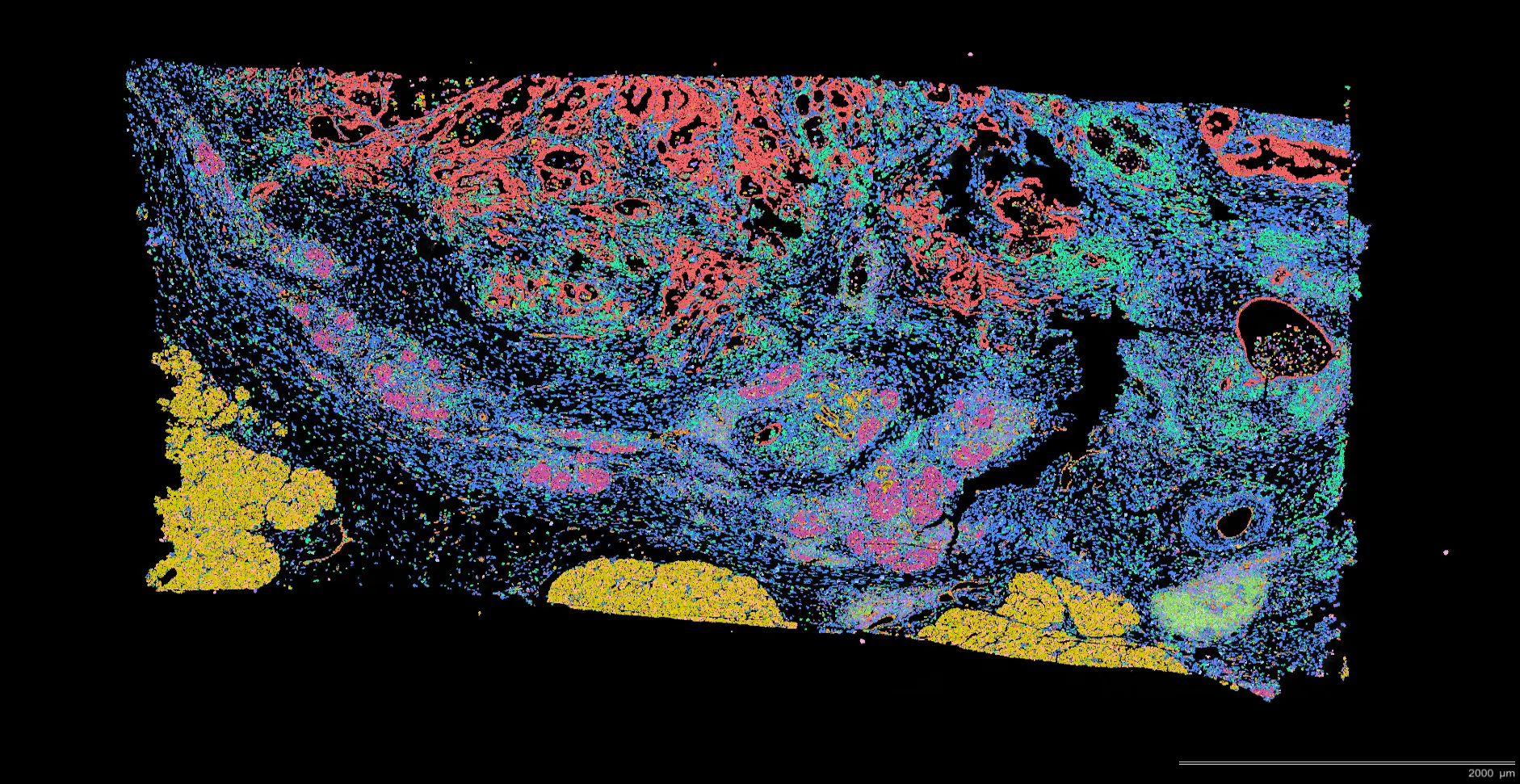
Spatial biology is the study of how cells are organized and interact within tissues while preserving their physical location.
Unlike conventional molecular techniques, spatial biology reveals where specific cells, genes and proteins are located inside tumors and how they communicate with one another.
Why is spatial biology important in oncology?
Spatial biology allows researchers to:
Understand the tumor microenvironment
Identify interactions between cancer and immune cells
Study tissue architecture
Discover new biomarkers
Improve therapeutic target discovery
Spatial biology is becoming an essential technology for next-generation cancer research.
Related terms: Spatial Transcriptomics, Single-cell RNA Sequencing, Multiomics
Single-cell RNA Sequencing (scRNA-seq)
What is Single-cell RNA Sequencing?
Single-cell RNA sequencing (scRNA-seq) is a technology that measures gene expression in individual cells rather than averaging signals across an entire tissue sample.
This allows researchers to identify distinct cell populations and understand how individual cells contribute to disease.
Why is single-cell RNA sequencing important in cancer research?
Single-cell RNA sequencing helps scientists:
Discover rare cell populations
Study tumor heterogeneity
Understand immune responses
Identify biomarkers
Reveal mechanisms of treatment resistance
Improve therapeutic target discovery
When combined with spatial biology and other multiomics technologies, single-cell RNA sequencing provides an unprecedented view of cancer biology at cellular resolution.
Related terms: Transcriptomics, Spatial Biology, Multiomics, Genomics
Updated: August 25, 2026