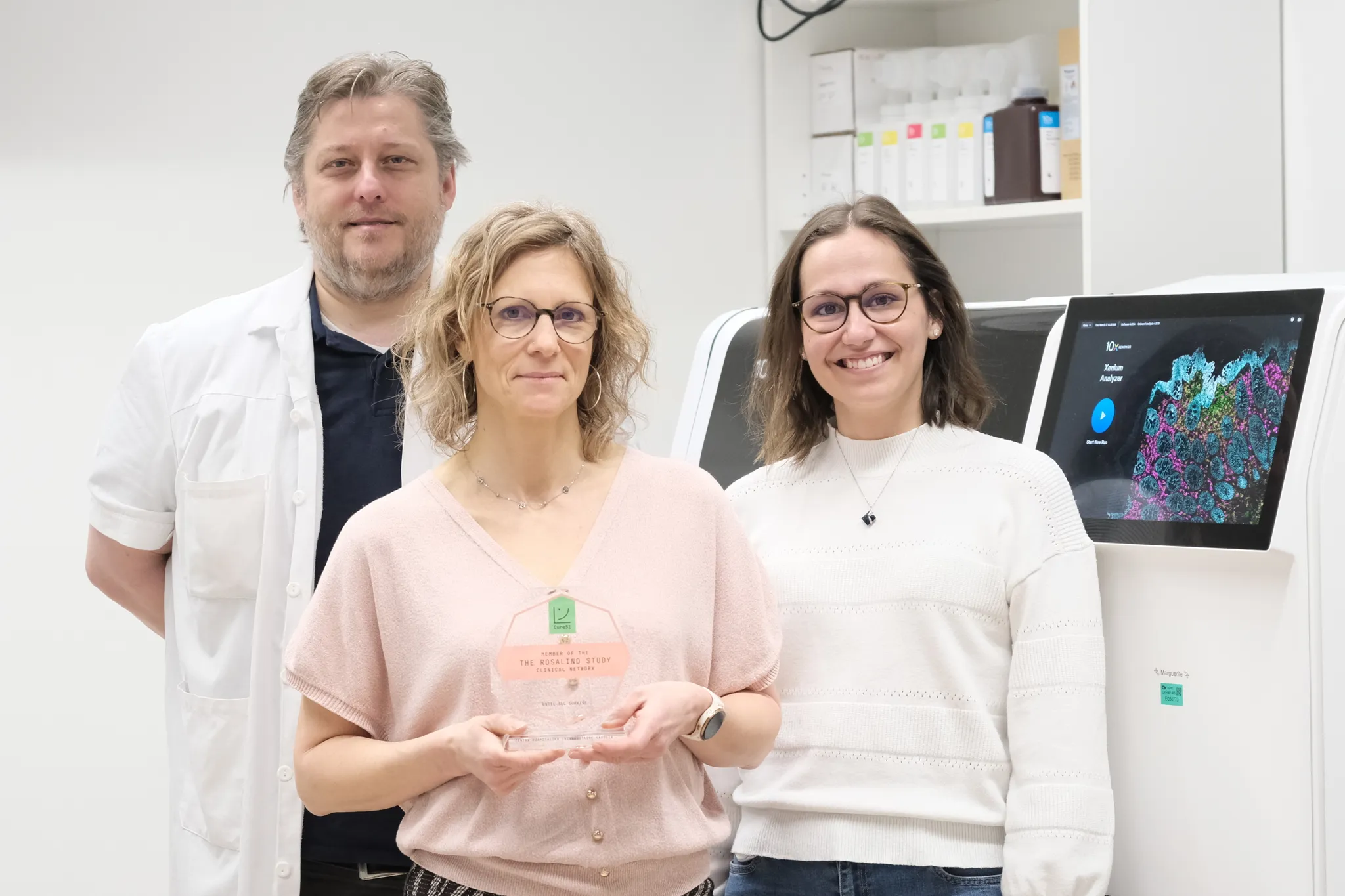
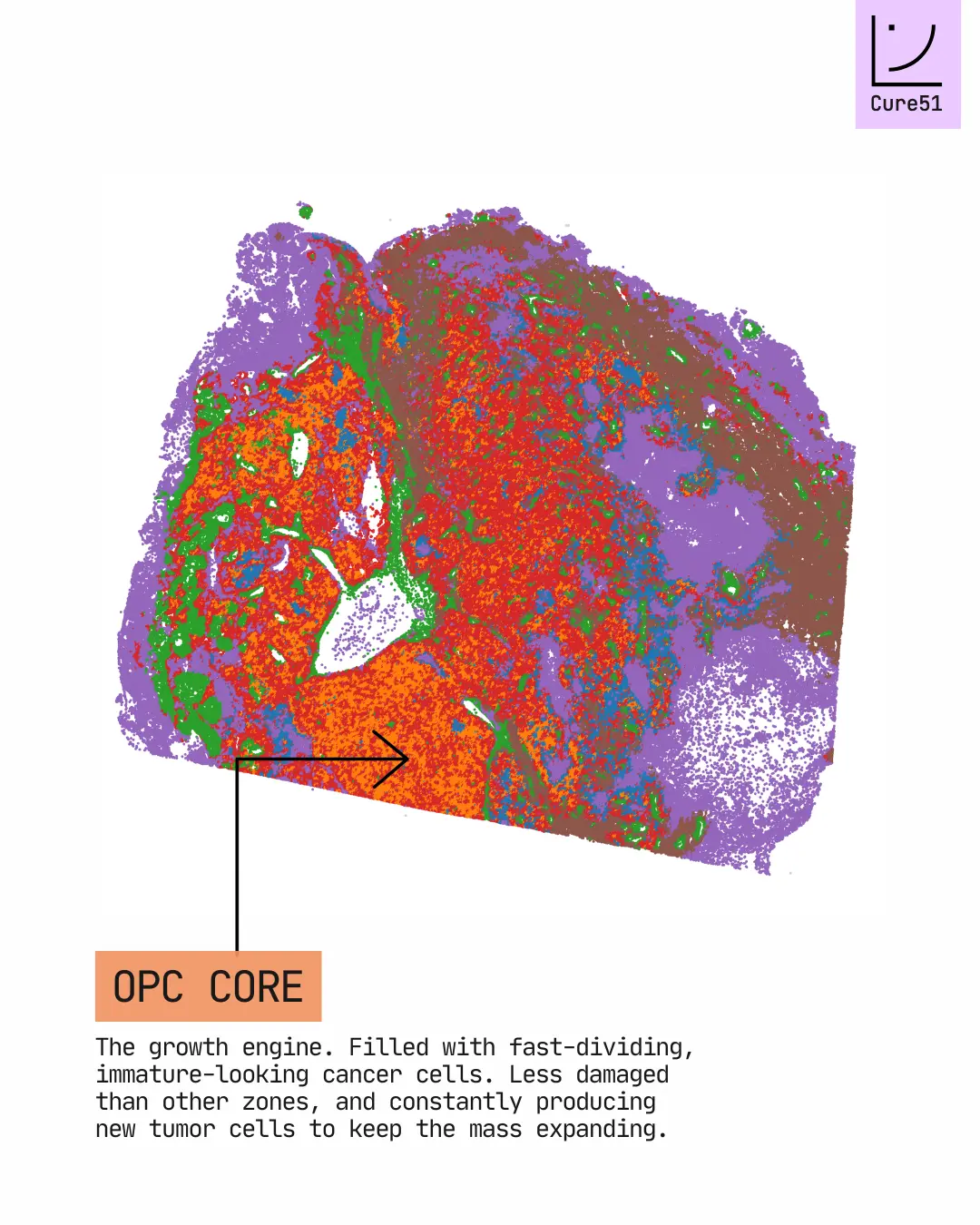
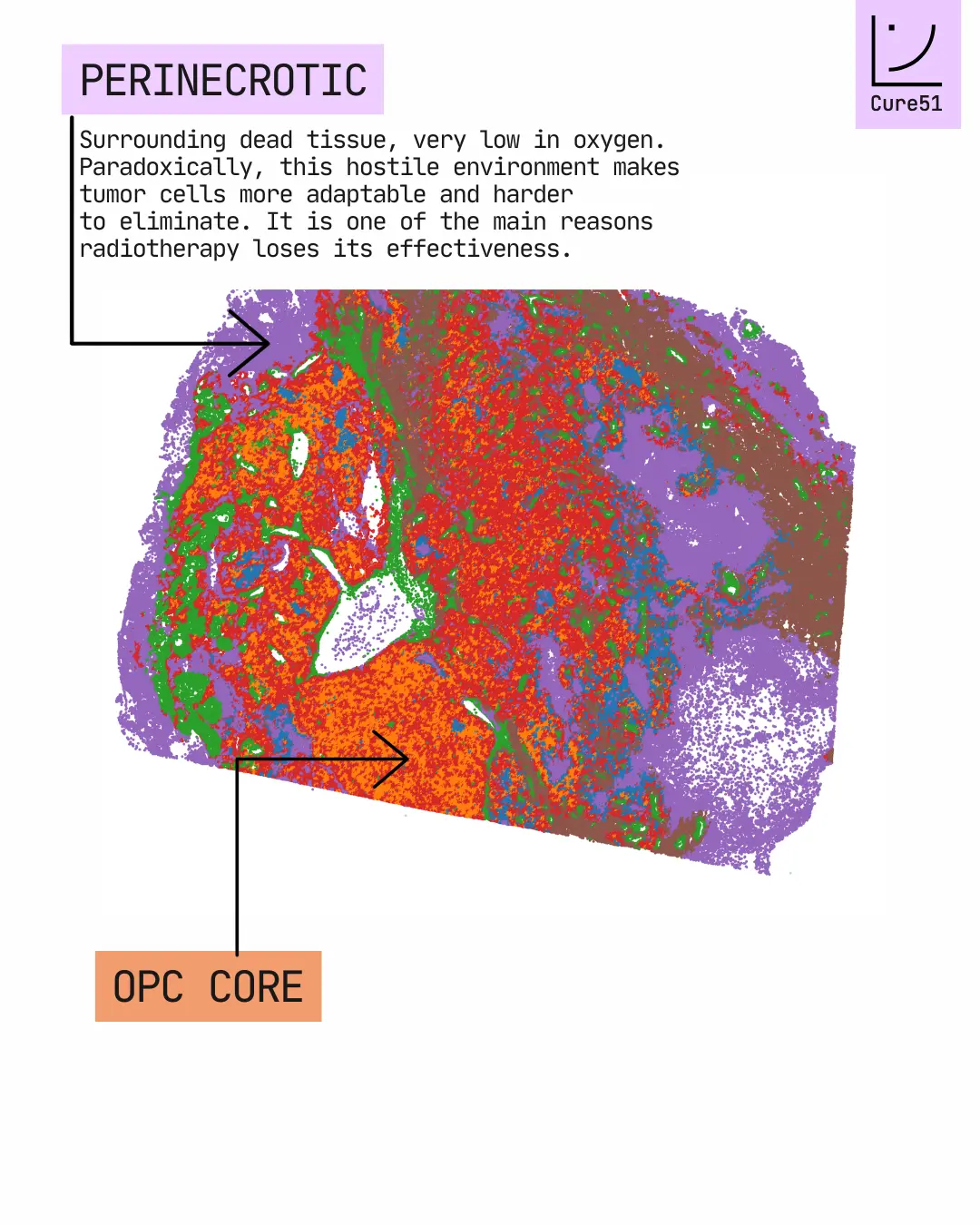
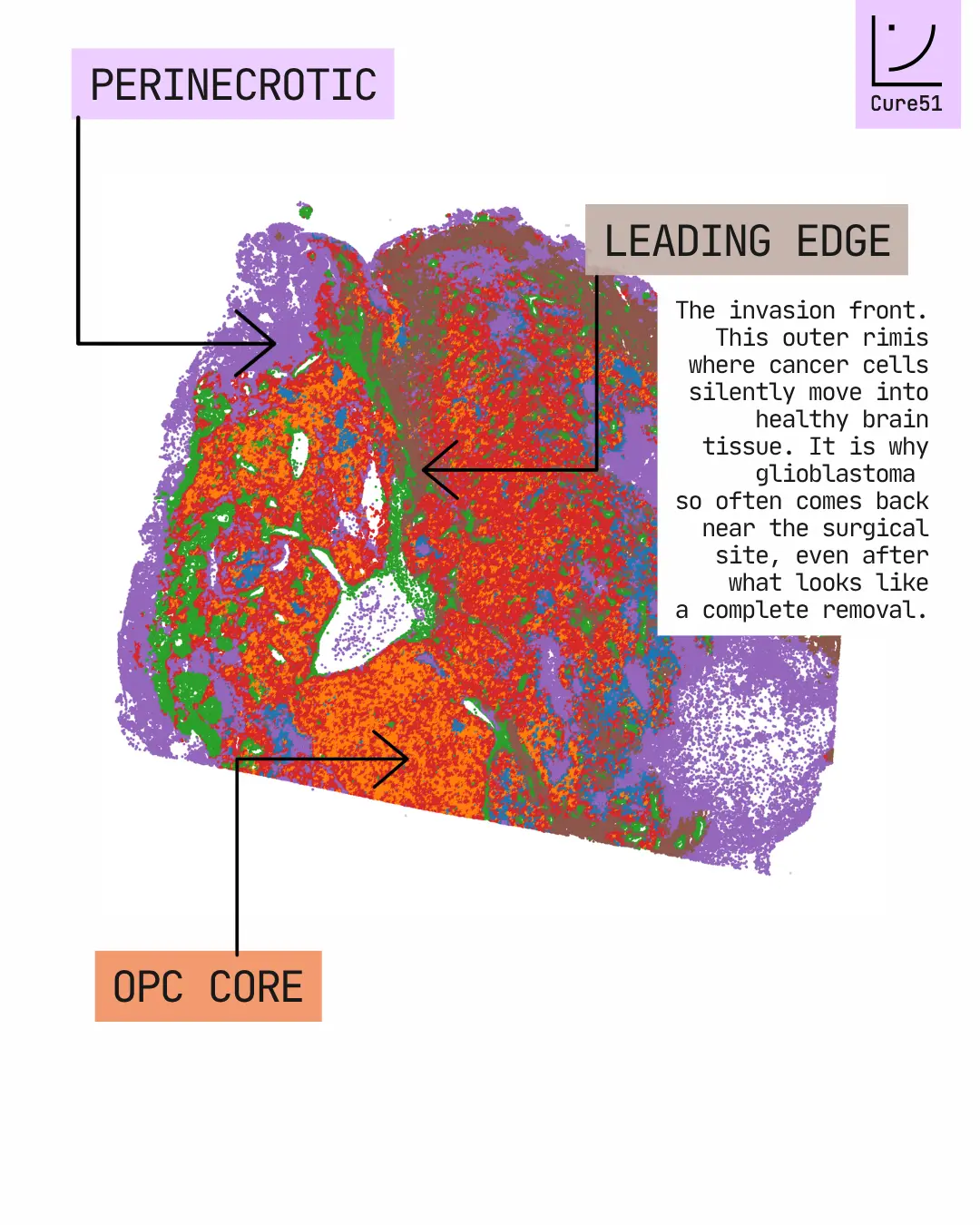
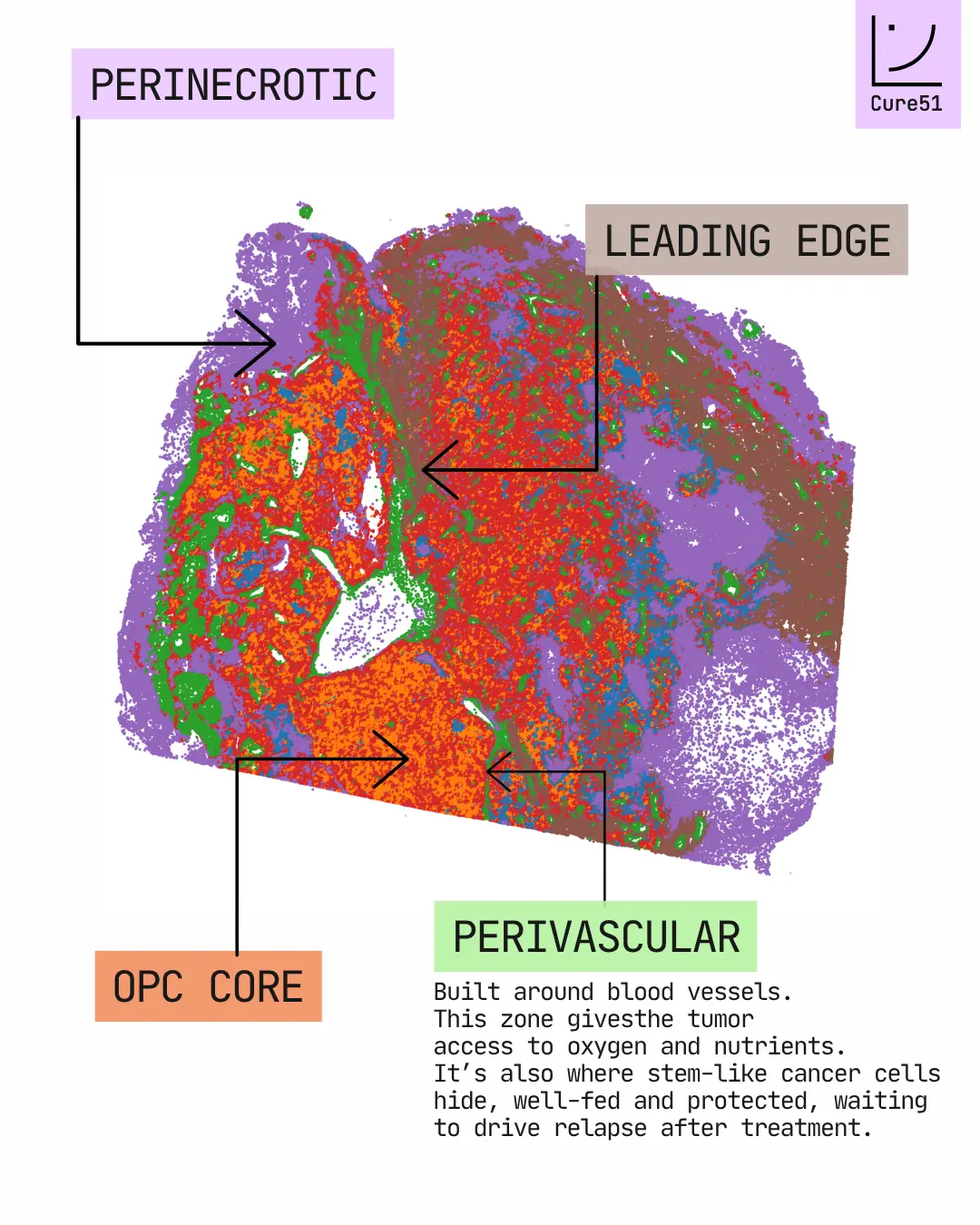
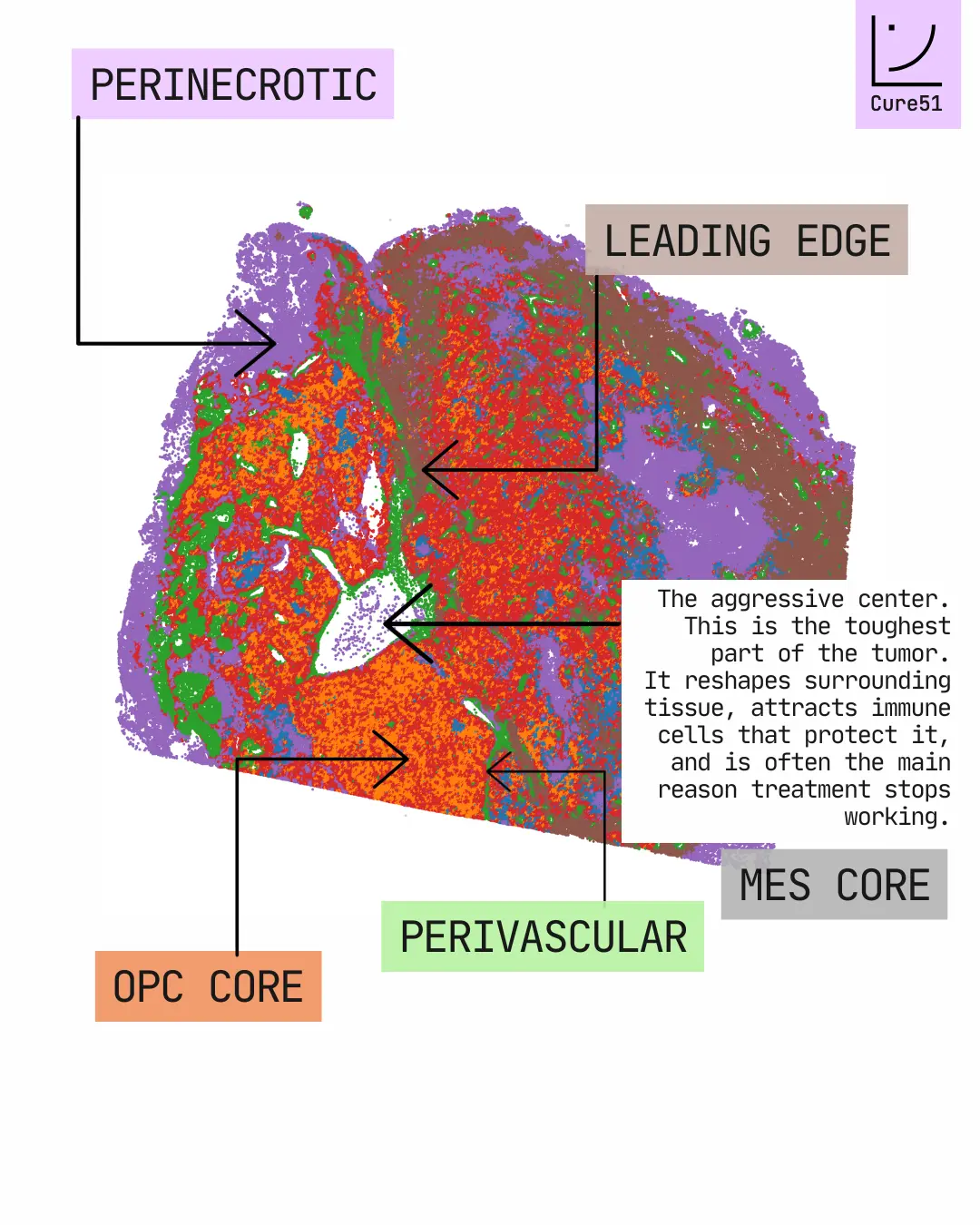
A glioblastoma is a complex system composed of five biological regions, each defined by its own cellular architecture, behavior and response patterns.
Most approaches treat the tumor as a whole. We map it as a living system. Using Xenium Prime from 10X Genomics, our pipeline captures biology at single-cell resolution, directly within its full spatial context. We observe which cells are present, how they are arranged, what surrounds them and how these relationships evolve across different patient profiles, including exceptional survivorship profiles.
In practice, this enables:
→ Transcript-based segmentation layered on multimodal cell boundary detection for higher spatial precision
→ Cell-type annotation using state-of-the-art foundation models and curated atlases across PDAC, GBM and SCLC
→ Spatial niche discovery revealing tumor domains and topological patterns at unprecedented spatial resolution
By combining cellular and architectural signals, we uncover the neighborhood dynamics that influence tumor evolution, treatment response and survivorship.
Updated: August 11, 2026