For the second year in a row, Cure51 participated in the Société Française de Pancréatologie (SFP) Congress, bringing the perspective of exceptional pancreatic cancer survivors into a growing scientific discussion around pancreatic ductal adenocarcinoma (PDAC).
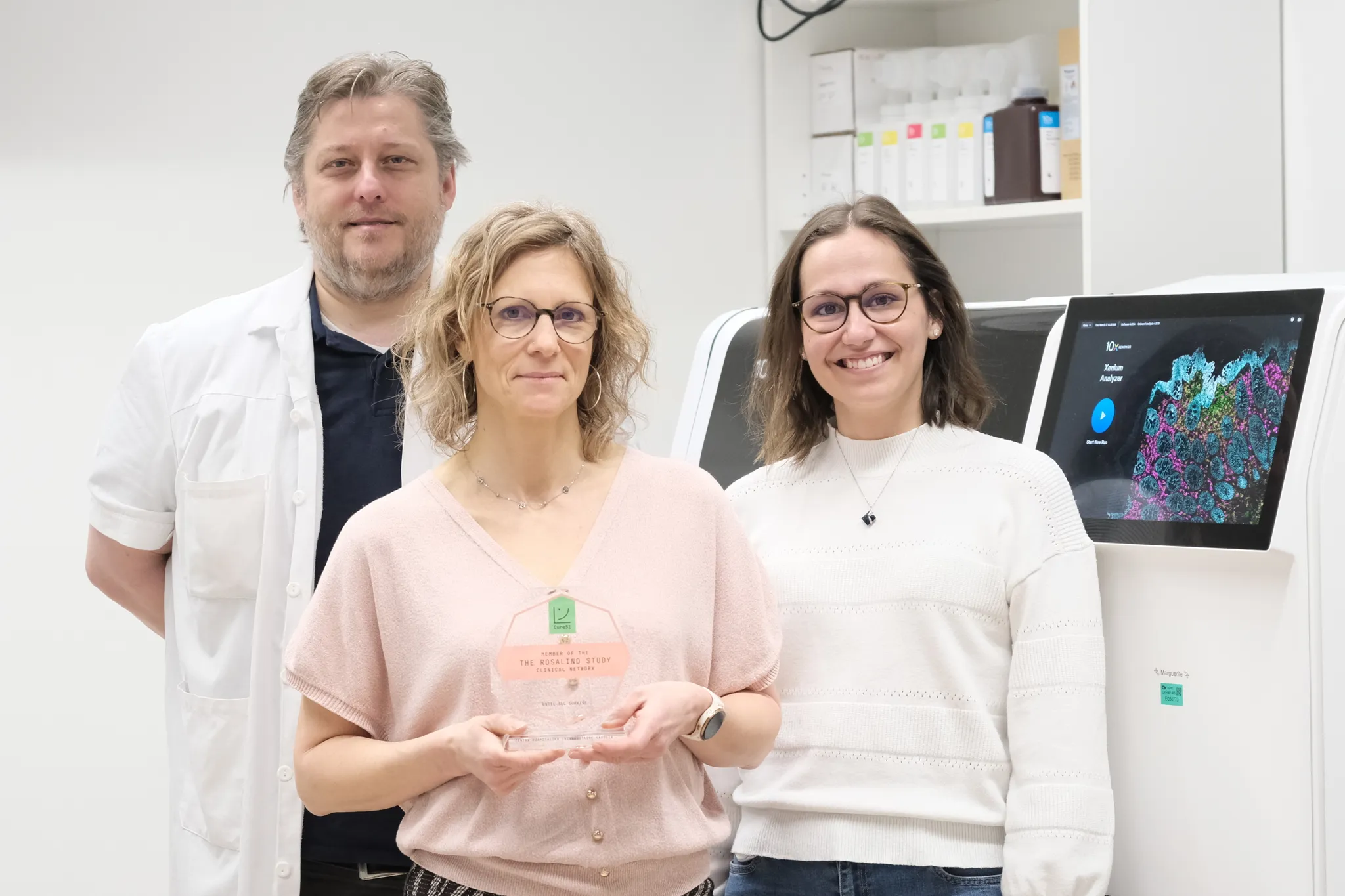
Representing Cure51, Elisabeth Auzias and Guillaume Schaller presented clinical characteristics from the PDAC cohort of the Rosalind Study, our international research programme focused on understanding the biology of exceptional cancer survival.

The congress brought together clinicians and researchers working across pancreatic cancer biology, immunology, RAS biology, spatial transcriptomics, artificial intelligence and computational pathology. Across these different fields, several themes emerged that closely connect with Cure51’s research approach.
Exceptional survival raises a biological question
Pancreatic ductal adenocarcinoma remains one of the most challenging cancers to treat. Yet within this difficult landscape, a subset of patients achieves exceptionally long survival. These patients represent a powerful biological opportunity. Rather than viewing long-term survival simply as an outcome to describe, Cure51 asks a deeper question: what is different about the biology of patients who achieve exceptional survival?
At the SFP Congress, Cure51 presented clinical characteristics from its exceptional PDAC survivor population. The data indicate that exceptional survival emerges from a complex interplay of clinical factors, such as age at diagnosis, overall health and treatment history. The high heterogeneity of the outlier population highlights the importance of clinical characterization alongside deep multimodal analysis to uncover the biological drivers of survivorship.
Clinical trajectories: a key layer of exceptional survival biology
Clinical characterization provides the foundation for understanding exceptional survivors. The Rosalind Study combines clinical trajectories and outcomes with multi-omic and spatial profiling, allowing Cure51 to study exceptional survival across both the clinical and biological dimensions of the disease. The goal is to move from the observation that some patients survive exceptionally well toward identifying the biological mechanisms that may help explain why.
The discussions about the Rosalind Study also highlighted the importance of looking at time. Exceptional survival is ultimately a trajectory rather than a single endpoint. Patients can differ in:
Primary tumor characteristics
Metastatic sites
Treatment sequences
Response and progression patterns
Time to recurrence
Late resistance
Histological evolution
Disease plasticity
These variables provide essential context for interpreting molecular findings.
For Cure51, this means clinical information can become an analytical modality in its own right. Structured disease and treatment trajectories can be integrated with molecular and spatial datasets to identify biological patterns associated with different forms of exceptional survival. This longitudinal perspective is particularly important when studying resistance. A biological state associated with long-term disease control at one point in time may differ from the state associated with late progression or treatment escape.
Ongoing dialogue on the importance of RAS-targeted therapies
One of the strongest themes emerging from the SFP Congress was the importance of RAS biology in pancreatic cancer. RAS alterations, particularly KRAS mutations, are a defining feature of PDAC. The development of therapies targeting specific RAS alterations is creating new therapeutic opportunities and changing the questions researchers can ask.
This is particularly important following the US FDA’s August 2026 approval of daraxonrasib (Rasonque), a RAS(ON) multi-selective inhibitor, with further clinical trials now exploring RAS inhibition in earlier disease settings and therapeutic combinations. RAS has long been considered “undruggable”, making this clinical validation milestone especially remarkable and raising the broader question of whether we are entering an era in which everything can become druggable. At the same time, safety management and the durability of clinical benefit remain important considerations.
This shift places particular emphasis on questions around resistance, especially which biological states enable, delay or prevent escape from RAS-targeted treatment. This is also a key focus for Cure51, as a growing number of new RAS inhibitors are in development. The biology of our survivors may help us understand how to create the best combinations to enable durable responses.
Immune containment: understanding durable disease control
PDAC is commonly characterized by an immunologically non-inflamed or immune-excluded microenvironment. Nevertheless, studies of long-term survivors show that effective antitumor immunity can occur in a subset of patients.
Work led by surgeon-scientist Vinod Balachandran at MSKCC demonstrated that the combination of abundant CD8-positive T-cell infiltration and high-quality neoantigens was associated with long-term survival, alongside durable neoantigen-specific T-cell responses and evidence of immunoediting during progression. These findings move the question beyond whether immune cells are present: are they spatially positioned, functionally competent and able to maintain tumor recognition over time?
For Cure51, spatial profiling offers a way to investigate immune recognition, exclusion and containment within the broader biology of exceptional survival. The objective is to define the patient subsets in which it contributes and the cellular interactions that sustain or disrupt it.
Pancreatic cancer resistance is a multicellular problem
PDAC develops within a dense ecosystem of malignant cells, fibroblasts, immune populations, extracellular matrix and vascular components. Therapeutic response can therefore reflect interactions among several cell states rather than a single tumor-cell alteration.
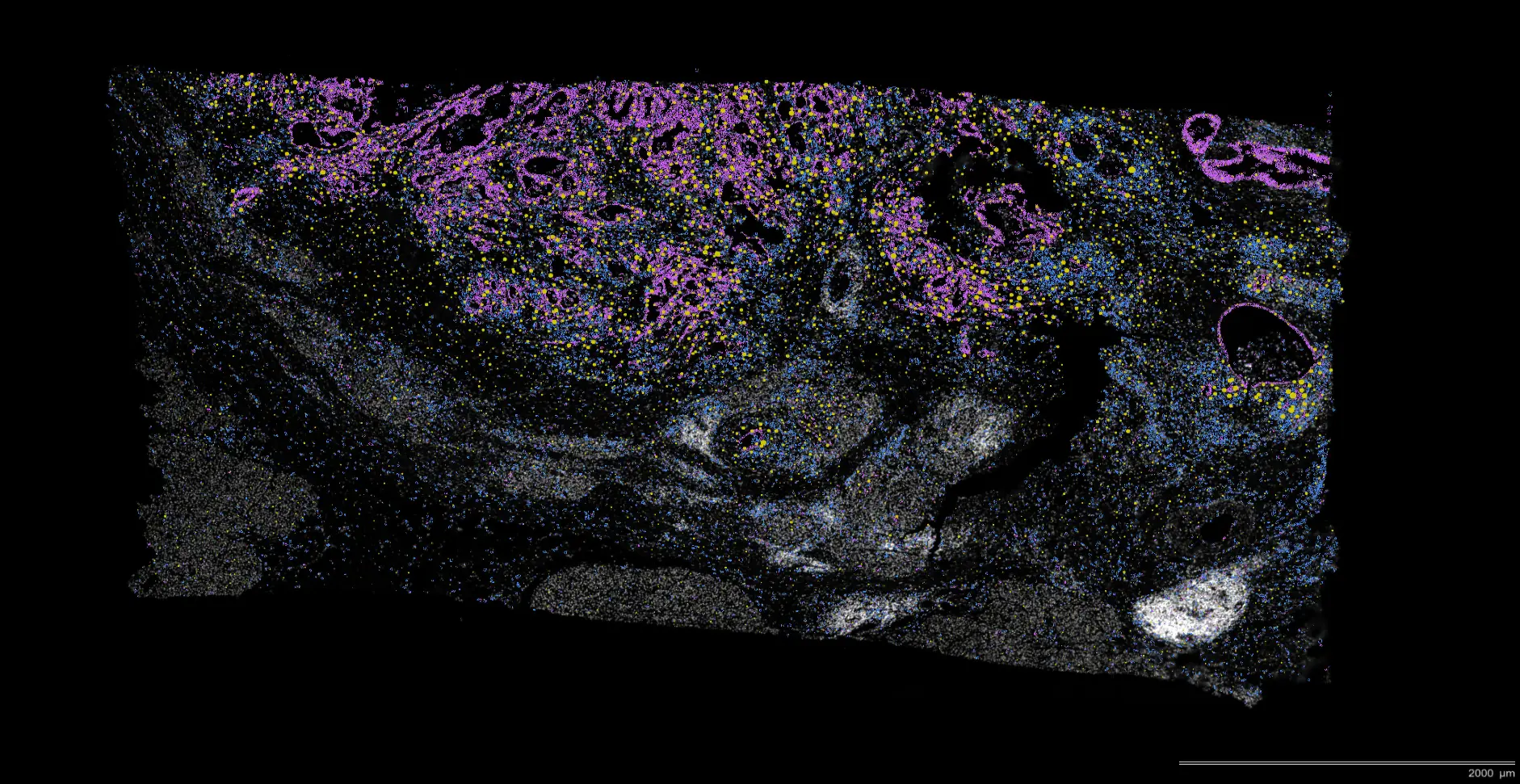
Research presented and discussed at the SFP Congress has shown that tumor-cell plasticity, CAF heterogeneity, myeloid programmes and stromal architecture can shape immune exclusion, drug delivery and treatment resistance. Spatial biology adds critical resolution by identifying where these states occur, which cell populations interact and whether sensitive and resistant niches coexist within the same tumor.
An exceptional survivor's biology may involve an interaction between several cellular populations rather than a single dominant molecular alteration. Spatial biology is particularly valuable here because it can reveal where different cell states are located, which populations interact and how distinct microenvironments coexist within the same tumor.
For Cure51, this reinforces the value of combining spatial data with molecular and clinical information.

Novel insights from digital pathology in PDAC research
Digital pathology was also a prominent theme at the congress. It offers opportunities to identify patterns in large histological datasets and extend biological discoveries from deeply characterized samples to much larger cohorts.
For Cure51, this creates a valuable methodological opportunity. A potential workflow begins with deep biological discovery in the Rosalind cohort, where molecular and spatial data can identify candidate biological states. These findings can then be explored through orthogonal approaches such as adjacent-section analysis, immunohistochemistry or RNA in situ hybridization.
Once biological states have been robustly characterized, computational pathology can help identify corresponding patterns across larger H&E datasets. This creates a bridge between deep multimodal discovery and scalable analysis. Its quality depends on translational relevance, inter-centre variability, batch effects and independent molecular validation. These considerations make careful biological validation an essential step before large-scale computational deployment.
Building the pancreatic cancer research community
The SFP Congress also highlighted the importance of collaboration in advancing pancreatic cancer research. The congress brought together researchers working across complementary disciplines, from clinical oncology and RAS biology to immunology, spatial transcriptomics and AI.
Cure51 was particularly pleased to exchange ideas with Louis de Mestier, whose collaboration and contribution through Hôpital Beaujon, AP-HP have played an important role in the Rosalind Study, as well as Rémy Nicolle, whose work around AI, transcriptomics and histology connects strongly with the computational dimensions of Cure51's research.
The congress also provided an opportunity to connect with members of the wider SFP community, including Nelson Dusetti, Jérôme Cros, Brice Channez, Anthony Turpin and Gaël Roth, alongside other clinicians and researchers advancing pancreatic cancer research in France and internationally.
As the SFP continues to develop its scientific community and shape its ambitions for a major pancreatic disease congress, these exchanges provide an important forum to share emerging discoveries and bring complementary approaches together.
What exceptional survivors can teach us about PDAC
Exceptional survival requires a global approach that brings together clinicians, researchers, hospitals, TechBio companies and pharma. This global approach connects clinical data and outcomes with molecular data, explores immunological and genetic avenues including molecular alterations such as KRAS and targeted approaches, and combines H&E and spatial data through a multimodal approach. It also addresses treatment resistance and aims to improve treatment response.
In PDAC, where disease biology is shaped by complex interactions between tumor cells, the immune system, stroma and treatment, exceptional survivors provide a unique population in which to investigate durable disease control. By combining clinical trajectories, multi-omics and spatial biology, Cure51 aims to identify the biological mechanisms associated with exceptional survival and translate those insights into new opportunities for cancer research and drug discovery.
Updated: October 13, 2026