Modern cancer research generates an unprecedented volume of biomedical data. Clinical records, multi-omics datasets, pathology images, publications and experimental results all contain valuable information. Rather than simply collecting data, the challenge is transforming it into actionable scientific insights to the benefit of patients.
We've built a product ecosystem designed to help researchers navigate this complexity. By combining secure data infrastructure, AI-powered exploration and intuitive scientific applications, our platforms enable scientists to spend less time searching for information and more time generating discoveries.
Why Cancer Research Needs More Than Data
Cancer research depends on integrating multiple sources of information. Patient clinical histories, genomic sequencing, transcriptomics, spatial biology and laboratory experiments each provide only part of the picture.
Without the right infrastructure, researchers often face challenges such as:
Fragmented datasets stored across different systems
Time-consuming manual data exploration
Limited collaboration between scientific teams
Difficulty connecting clinical outcomes with molecular findings
Complex analytical workflows that require specialized technical expertise
Building software that removes these barriers is becoming just as important as generating new data.
A Product Ecosystem Built for Discovery
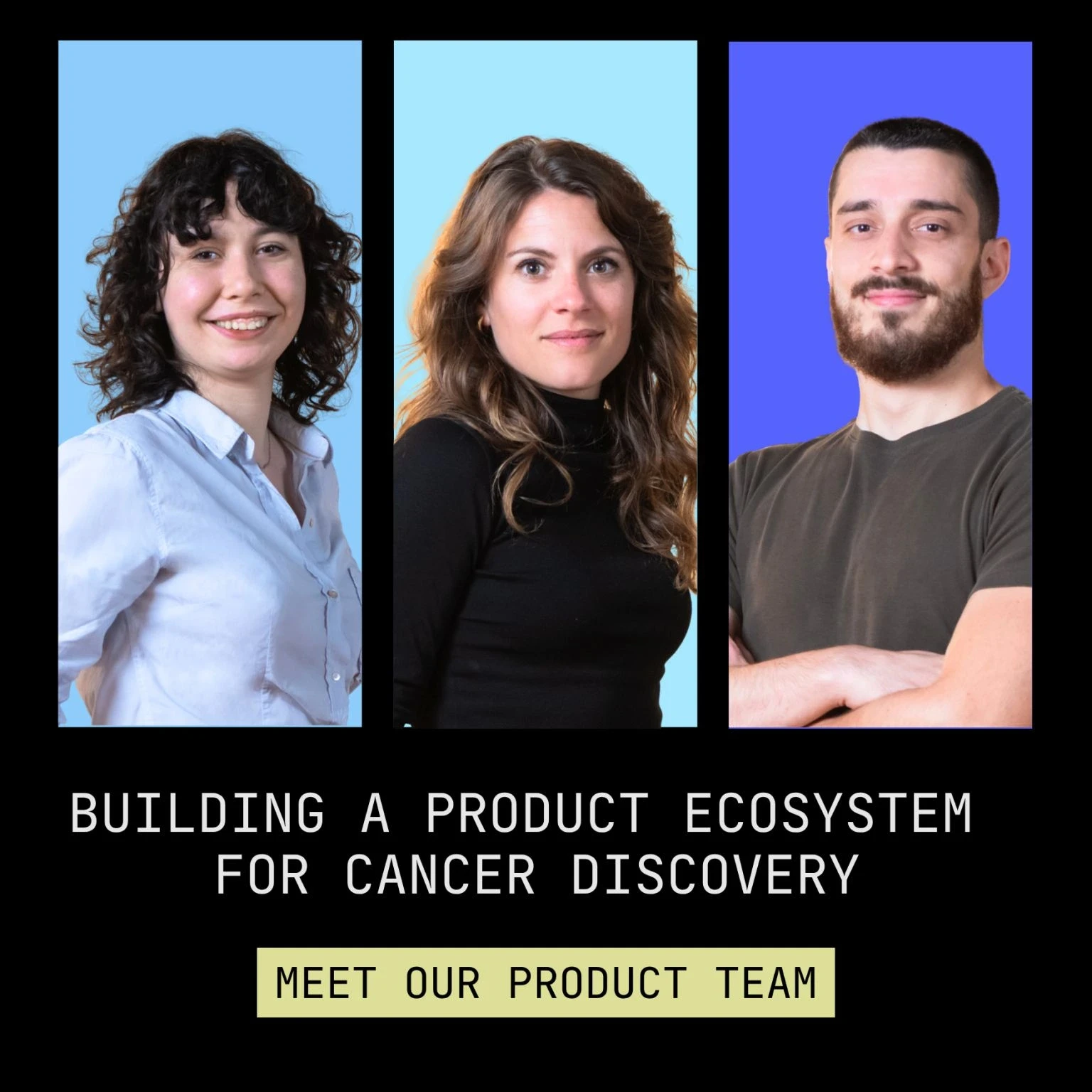
Our Product team works at the intersection of oncology, bioinformatics, engineering, AI and user experience to create platforms and solutions that support every stage of the research journey.
Today, this ecosystem is composed of four complementary platforms:
1. PPP (Patient Profile Platform): Managing Patient Workflows
PPP supports patient workflows and data collection across our international research network.
It enables consistent collection of clinical information while helping research teams coordinate data across participating centers, ensuring that high-quality patient data can flow into downstream scientific analyses.
2. The Knowledge Engine: A Foundation for Multi-Omics Data
Cancer research relies on combining diverse data types. The Knowledge Engine provides the infrastructure to organize, secure and manage both structured and unstructured biomedical data using a modern lake house architecture.
This centralized foundation allows researchers to work with clinical, molecular, and experimental data within a single environment.
3. Elio: AI-Powered Scientific Exploration
As biomedical datasets continue to grow, accessing information quickly becomes increasingly important. Elio enables researchers to explore clinical and biological data using natural language, making complex datasets more accessible while reducing the technical barriers to data exploration.
Rather than navigating multiple databases, scientists can interact with their data more naturally and efficiently.
4. Target Explorer: Turning Data into Research Opportunities
Target Explorer provides intuitive interfaces that allow scientists to investigate clinical and omics datasets while identifying potential therapeutic targets.
By bringing together multiple layers of biological information, researchers can better understand disease mechanisms and prioritize hypotheses for further validation.
Product Development Designed Around Scientific Users
Our Product team collaborates closely with scientists, bioinformaticians, software engineers, operations specialists, quality experts, legal teams and designers throughout the product lifecycle. From user research and product design to development, testing, deployment and continuous improvement, every platform evolves alongside the needs of researchers.
This multidisciplinary approach ensures that scientific complexity is translated into tools that remain intuitive, secure, and scalable.
The Next Evolution: The Discovery Platform
Our next objective is to connect these individual platforms into a unified ecosystem: the Discovery Platform.
By deeply integrating the Knowledge Engine, Elio and Target Explorer, researchers will be able to move seamlessly between data management, AI-assisted exploration and target discovery.
Instead of isolated tools, the Discovery Platform will create connected scientific workflows where:
Data becomes immediately accessible across applications
AI enhances exploration and hypothesis generation
Scientific insights continuously enrich future analyses
Researchers spend more time on discovery and less on technical complexity
Accelerating Cancer Target Discovery Through Better Platforms
Scientific breakthroughs depend on the digital platforms that organize knowledge, connect data and empower researchers to ask better questions. As cancer datasets continue to grow in scale and complexity, building integrated product ecosystems will become an increasingly important part of accelerating target discovery and advancing oncology research.
We're building the infrastructure that helps transform biomedical data into scientific discovery, bringing together knowledge, AI and research workflows to support the next generation of cancer research.
Updated: July 22, 2026